CEUs: 2 CEU | Format: Self-paced | Level: Intermediate | Audience: Physical therapists, physical therapist assistants, occupational therapists, occupational therapy assistants, speech-language pathologists, athletic trainers, and other rehabilitation professionals.
Approvals:
*Maryland Board of Physical Therapy Examiners #2026-578 *West Virginia Board of Physical Therapy #CEUL183292
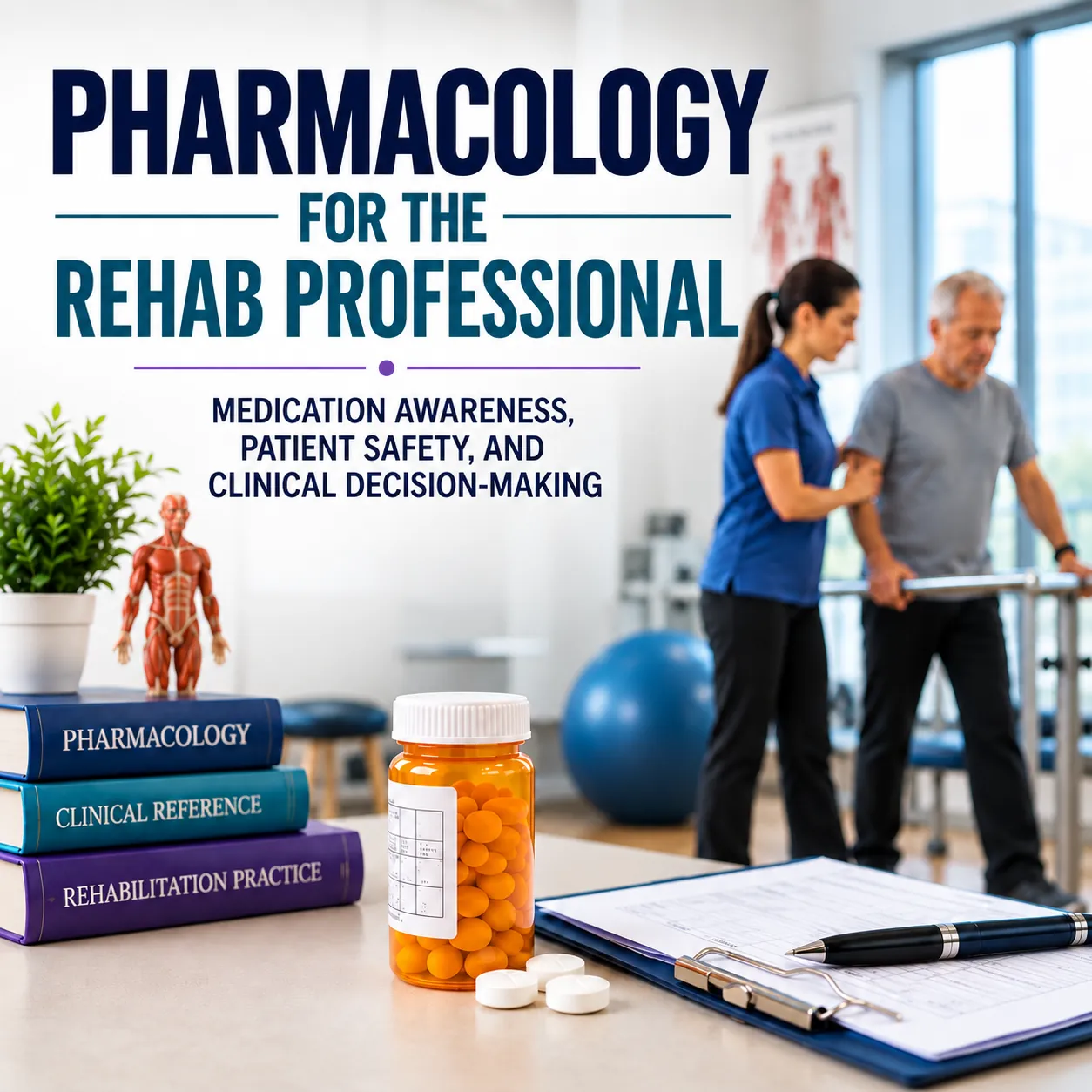
Pharmacology for the Rehab Professional
Rehabilitation professionals routinely work with patients taking medications that may influence blood pressure, heart rate, balance, cognition, alertness, pain, endurance, and overall participation in therapy. Understanding these potential effects can help clinicians recognize meaningful changes in patient status and make safer, more informed decisions during rehabilitation care.
Pharmacology for the Rehab Professional provides a practical introduction to medication concepts relevant to rehabilitation practice. Learners explore how the body processes medications, how medications produce their effects, and how medication timing may influence patient presentation and therapy performance. The course also examines commonly encountered medication classes and their potential functional and safety implications.
Through rehabilitation-focused examples and clinical scenarios, learners will practice recognizing findings that may suggest an adverse medication effect, interaction, or medication-related change in status. Special attention is given to polypharmacy, medication changes, and transitions of care. The course concludes with a practical approach to moving from observation to action—including when to monitor, modify or pause treatment, document relevant findings, and communicate concerns to the appropriate member of the healthcare team.
Course Learning Objectives
Upon completion of this course, learners will be able to:
- Explain why medication awareness matters to rehabilitation examination, intervention, and patient safety.
- Differentiate pharmacokinetics from pharmacodynamics and relate absorption, distribution, metabolism, excretion, and medication timing to therapy performance.
- Identify functional and safety implications associated with common medication classes encountered in rehabilitation.
- Recognize findings that may suggest an adverse medication effect, interaction, or medication-related change in patient status.
- Explain how polypharmacy and care transitions may contribute to falls, cognitive changes, medication discrepancies, and functional decline.
- Select an appropriate rehabilitation response to a potential medication-related concern, including monitoring, modifying or pausing treatment, documenting findings, and communicating concerns.
Who Should Take This Course?
This course is designed for physical therapists, physical therapist assistants, occupational therapists, occupational therapy assistants, speech-language pathologists, athletic trainers, and other rehabilitation professionals who want to strengthen their understanding of medications and their potential influence on patient safety, function, and participation in rehabilitation.

Reviews
There are no reviews yet.